Arrow Signs in Yamashita Treasure Hunting

Introduction: Why Arrow Signs Matter in Yamashita Treasure Hunting

In the world of Yamashita treasure hunting, signs and symbols are everything. Among all the markers left behind by the Imperial Japanese Army during World War II, arrow signs are some of the most important—and also the most misunderstood.

Many beginners believe that when they see an arrow carved on a stone or tree, it simply means one thing: dig where it points. This belief is wrong and often leads to wasted effort, danger, and disappointment.

Arrow signs were never meant to be simple. They were designed to guide, mislead, and test the knowledge of anyone trying to follow them. These markers were part of a complete system that required careful observation, distance reading, land awareness, and logic.

This guide explains how arrow signs really work using simple grammar that even kids can understand.


What Is an Arrow Sign in Treasure Hunting?

An arrow sign is a trail marker, not a treasure marker.

Its main purpose is to:

  • Lead you to another marker
  • Guide you toward an entrance like a tunnel or bunker
  • Tell you where to walk, turn, or stop

An arrow does not usually point directly at the treasure from far away. Instead, it works like a road sign in the forest or mountains.

To understand an arrow sign correctly, it must be broken down into three main parts:

  1. Direction
  2. Distance
  3. Head and tail details

1. Understanding the Directional Intent of Arrow Signs

The direction of an arrow is the first thing people notice. However, the shape and condition of the arrow change its meaning.

Straight Arrow: The Most Common Trail Marker

A straight arrow means you should move in the general direction it points. It does not mean the treasure is already there. It tells you to look for the next marker or the entrance.

Straight arrows are guides, not final locations.

Broken Arrow: A Sign of Change

A broken arrow is very important. If the shaft looks cracked, bent, or offset, it means you should not follow the arrowhead.

Instead, follow the direction of the break. This indicates a turn or change in movement.

Reverse Arrow: A Misleading Marker

A reverse arrow points back toward where you came from. This is a misleading sign.

It often means you already passed the correct entry point or that the real direction is opposite of where the arrow points.


2. Distance Indicators: Reading the Body of the Arrow

The body of the arrow contains hidden distance instructions.

Shaft Length and Measurement

In many marker systems, the length of the arrow represents distance. One inch of carving can equal ten to fifteen feet in real distance.

This means longer arrows usually indicate longer travel.

Notches and Dots

Small dots or lines on the arrow are not decoration. They represent distance units or stations.

For example, three notches may mean three distance units or repeated steps.

These marks should always be counted and recorded.


3. Arrow Head and Tail Details: From Simple to Complex Meaning

Small details on the head and tail of an arrow can completely change its meaning.

Arrow with a Box or Square

If an arrow points to or contains a square shape, it often indicates a bunker or sealed room. These are usually man-made structures.

Arrow with a Circle or Hole

A circle or hole means a pit, well, or vertical shaft. These locations can be dangerous and must be approached with caution.

Double-Headed Arrow

A double-headed arrow suggests two deposits or two separate paths that need investigation.

Blunt or Blocked Tail

A flat or blocked tail usually means the path behind you is closed and that you are near the final location.


Basic Arrow Decoding Table

Arrow Feature Traditional Meaning
Sharp Arrowhead Follow exactly to the next marker
Arrow Pointing Up Higher ground or inside a hill
Arrow Pointing Down Below ground or deep depression
Curved Arrow Follow the shape of the land like a river or ridge
Arrow on a Tree Look for a nearby marker stone or tree

Counter-Signs: The Hidden Rule Most Hunters Miss

Counter-signs are small marks placed near arrow signs that change the instruction.

If you find an arrow, always check nearby rocks, soil, or trees.

A small dot on the left means veer left. A dot on the right means adjust right.

Ignoring counter-signs is one of the most common mistakes beginners make.


Why Arrow Signs Are Never “Point and Dig”

Arrow signs were designed to control movement and protect locations.

Digging where an arrow points can destroy evidence, cause accidents, and lead to nothing.

True decoding requires patience, logic, and respect for the land.


Final Thoughts: Knowledge Is the Real Treasure

Arrow signs are messages carved into nature. They must be studied, measured, and understood.

The real treasure is not only gold or artifacts, but knowledge and discipline.

The 175 Yamashita Treasure Maps Explained

A Complete Guide to Modified Symbols, Hidden Codes, and Proper Decoding

For decades, the 175 Yamashita treasure maps have captured the attention of treasure hunters, historians, and researchers in the Philippines and beyond. These maps are widely believed to be connected to hidden wartime deposits left during World War II. However, many who attempt to use them fail due to one critical mistake: treating them as ordinary treasure maps.

The truth is simple. The 175 Yamashita treasure maps were never meant to be easy. They were designed to confuse, mislead, and protect valuable deposits from unauthorized discovery. Understanding these maps requires far more than curiosity. It demands historical knowledge, symbol interpretation skills, and a deep understanding of terrain and geography.

This article explains how the 175 Yamashita treasure maps work, why they are so difficult to decode, and how serious treasure hunters analyze them correctly.

What Are the 175 Yamashita Treasure Maps?

The 175 Yamashita treasure maps are a collection of maps believed to show the locations of wartime deposits hidden across the Philippines. Unlike traditional maps, they do not rely on a single language or symbol system. Instead, they combine modified symbols, Kanji characters, Korean script, Roman letters, and selective English alphabets.

This mixture serves one primary purpose: security. Each layer of writing adds complexity, ensuring that only individuals with the correct knowledge can interpret the true meaning. A symbol that appears simple on the surface may represent something entirely different when viewed within its proper historical and geographical context.

Why the 175 Treasure Maps Are Extremely Difficult to Decode

One of the defining features of the 175 maps is their multi-layered encoding system. A single symbol rarely has one fixed meaning. Interpretation depends on orientation, nearby landmarks, elevation, and wartime logistics.

For example, a Kanji character may represent a terrain feature, while a Roman letter nearby alters its direction or distance. A Korean character may function as a phonetic clue rather than a literal instruction. Hunters who attempt to read these maps literally often dig in the wrong locations.

The maps were intentionally designed so that surface-level reading leads to failure.

Modified Symbols and Their Hidden Meanings

Modified symbols are among the most dangerous elements of Yamashita treasure maps. These are familiar symbols that have been altered slightly to change their meaning. A mountain symbol may include an added line, a rotated angle, or an overlaid letter that completely shifts its interpretation.

Arrows are a common source of confusion. Many assume arrows indicate direction. In reality, arrows can represent depth, distance, or even sequence. Dots may signify deposits, warnings, or reference points. Without understanding how these symbols were modified, hunters risk wasting time, money, and effort.

Successful decoding requires pattern recognition rather than guesswork.

Literal Maps vs Intellectual Maps

A critical distinction in Yamashita map analysis is the difference between literal maps and intellectual maps.

A literal map focuses only on visible markings. An intellectual map combines symbols with historical movement, military strategy, and environmental logic. Rivers may serve as reference points rather than destinations. Mountains may indicate orientation rather than excavation sites.

Treasure was buried for strategic reasons. Without understanding why a location was chosen, it is impossible to understand how to find the deposit.

Common Mistakes Made by Treasure Hunters

One of the most common mistakes is emotional interpretation. Many treasure hunters assume that every triangle indicates a tunnel or every dot marks gold. This assumption ignores a fundamental rule of Yamashita codes: no symbol has a universal meaning.

A hunter’s background also affects interpretation. Engineers, historians, and amateurs often read the same symbol differently. Without a systematic method, personal bias replaces logic. The map itself does not deceive. It simply exposes poor interpretation.

Japanese Coding Techniques Used During World War II

During World War II, Japanese military forces were highly skilled in information security. The use of mixed writing systems in treasure maps functioned as an early form of encryption.

Kanji, Korean characters, Roman letters, and English symbols were layered to produce double and triple meanings. These meanings only become clear when aligned with real terrain and landmarks. This method is similar to modern encryption systems where data remains unreadable without the correct key.

Understanding the intent behind the code is more important than memorizing symbols.

How to Properly Decode a Yamashita Treasure Map

Proper decoding follows a disciplined process. It begins with symbol interpretation, followed by terrain validation, and ends with historical cross-checking. Compass orientation, elevation changes, and land formations must match the encoded instructions.

Experienced treasure hunters look for repeating patterns and logical placement. They test assumptions before excavation. This careful approach separates professionals from hobbyists. One digs immediately. The other studies first.

Geographic Markers and Natural Clues

Nature plays a central role in Yamashita treasure maps. Rivers, hills, rocks, and trees are integrated into the coding system. However, not every landmark indicates a deposit.

A creek may suggest a shallow soldier deposit nearby. Changes in soil or rock formation may indicate deeper excavation. Understanding geography allows the map to function as intended—in the real world rather than on paper alone.

Emperor Deposits vs Quick Deposits

Not all deposits shown on the 175 maps are equal. Emperor deposits are deep, heavily secured, and often protected by traps. These sites can reach depths of 30 to 60 meters. Quick deposits, buried rapidly by soldiers, are usually shallow and contain smaller amounts.

For beginners, quick deposits are far more practical. Knowing which type of deposit a map refers to is essential for safety, planning, and success.

Final Thoughts: The True Purpose of the 175 Treasure Maps

The 175 Yamashita treasure maps are not merely guides to hidden gold. They are intellectual challenges designed to test discipline, patience, and understanding.

Treasure hunting is not about luck. It is about knowledge. Symbols form a language. The land serves as the book. Those who know how to read both will not be misled. Those who rush will be confused by the very map they trust.

Native American Tribe - Arrow Sign

Native American tribes are indigenous communities that have been present in North America for thousands of years. The term "Native American" encompasses a vast array of distinct cultures and traditions, each with their own unique histories, languages, and customs. 

These tribes have a rich cultural heritage and have contributed significantly to the shaping of North American history. However, the history of these tribes has been largely erased, and their voices have been silenced, particularly in the context of the United States.

Studying the culture and history of Native American tribes is essential to understanding the complexity of North American history and the ongoing struggles that indigenous communities face today. By understanding the experiences of Native American tribes, we can gain a greater appreciation for the cultural diversity of our continent and learn from the challenges and resilience of these communities.

The chosen tribe for this blog is the Cherokee Nation, one of the largest Native American tribes in the United States. The Cherokee Nation is a sovereign nation with a rich cultural heritage that has survived centuries of displacement and oppression.

History of the Tribe

A. Origin and Migration

The Cherokee Nation originated in the southeastern United States and has a long history of migration and displacement. The Cherokee people originally lived in the region now known as the southern Appalachians. According to Cherokee oral tradition, the tribe migrated to this region from the Great Lakes region over a thousand years ago.

The Cherokee Nation established a complex society that included a system of government, agriculture, and trade. The tribe also developed a sophisticated written language, which was created by Sequoyah, a Cherokee silversmith, in the early 19th century. The Cherokee language is still spoken today by members of the tribe.

B. Early Contact with European Settlers

The arrival of European settlers in North America marked a turning point in Cherokee history. In the 16th century, Spanish explorers made contact with the Cherokee people, followed by the French and English in the 17th and 18th centuries.

The Cherokee Nation initially maintained peaceful relations with European settlers, and the tribe entered into treaties with the British, French, and Spanish. However, as European settlers began to encroach on Cherokee lands and resources, tensions between the tribe and colonizers increased.

In 1830, the United States government passed the Indian Removal Act, which authorized the forced relocation of Native American tribes from their ancestral lands to territories west of the Mississippi River. 

The Cherokee Nation was among the tribes that were forcibly removed from their homes in what is known as the Trail of Tears. During the Trail of Tears, thousands of Cherokee people died from disease, starvation, and exposure.

C. Key Historical Events and Conflicts

The forced removal of the Cherokee Nation was a defining moment in the tribe's history, but the Cherokee people have also faced numerous other challenges over the centuries.

One of the most significant conflicts in Cherokee history was the Cherokee Wars, which occurred in the 18th century. The Cherokee Nation fought against British and American forces in several conflicts, including the French and Indian War and the American Revolutionary War.

In the 19th century, the Cherokee Nation also faced internal conflict as the tribe debated how to respond to increasing pressure from European settlers. Some Cherokee leaders advocated for assimilation and cooperation with the U.S. government, while others sought to maintain the tribe's independence and resist encroachment on their lands.

D. Current Status and Challenges Faced by the Tribe

Today, the Cherokee Nation is a federally recognized sovereign nation with a government that operates under a constitution adopted in 1975. The Cherokee Nation has its own courts, police force, and healthcare system.

However, the Cherokee Nation and other Native American tribes continue to face significant challenges. One of the most pressing issues is the ongoing struggle for land rights and sovereignty. Many Native American tribes have been fighting for decades to regain control of their ancestral lands and protect their natural resources from exploitation by corporations and governments.

In addition to land rights, Native American communities also face social and economic challenges. Many Native American tribes experience high rates of poverty, unemployment, and poor health outcomes. There is also a lack of access to education and economic opportunities in many tribal communities, which can lead to a cycle of poverty and disadvantage.

Cultural Traditions and Beliefs

A. Spiritual Practices and Ceremonies

The Cherokee Nation has a rich spiritual tradition that incorporates a belief in the interconnectedness of all living things. Cherokee spiritual practices include the use of medicinal plants, sacred dances, and ceremonies that honor the natural world.

One of the most important ceremonies in Cherokee culture is the Green Corn Ceremony, which takes place annually to celebrate the harvest and renew the bonds between the tribe and the natural world.

Other important ceremonies include the Stomp Dance, which is a communal dance that celebrates life and health, and the Cherokee New Year, which takes place in late January or early February and marks the beginning of a new cycle of life.

B. Art and Music

The Cherokee Nation has a long tradition of artistic expression, including basket weaving, pottery, and beadwork. Cherokee art often incorporates traditional symbols and motifs, such as the seven-pointed star and the diamondback rattlesnake.

Cherokee music is also an important part of the tribe's cultural heritage. Traditional Cherokee music includes songs for social and ceremonial occasions, as well as lullabies and healing songs.

C. Language and Storytelling

The Cherokee language is an integral part of the tribe's cultural identity. The Cherokee language has a unique syllabary, which was developed by Sequoyah in the early 19th century. The syllabary allows the Cherokee language to be written down and has played a crucial role in the preservation of the Cherokee language and culture.

Storytelling is also an important part of Cherokee culture, with oral traditions passed down through generations. Cherokee stories often incorporate elements of nature and animals, and many stories contain important moral lessons.

D. Food and Cuisine

Cherokee cuisine includes a range of traditional foods, including cornbread, hominy, and bean soup. The tribe also has a tradition of using medicinal plants in their cooking, such as ramps, a type of wild onion that is believed to have medicinal properties.

One of the most famous Cherokee foods is fry bread, which is a type of bread made by frying dough in oil. Fry bread has become an important symbol of Native American identity and is often served at powwows and other tribal events.

E. Clothing and Adornment

Traditional Cherokee clothing includes long dresses and leggings for women and breechcloths and shirts for men. The tribe also has a tradition of using beadwork and embroidery to decorate clothing and accessories, such as moccasins and purses.

Cherokee adornment includes the use of jewelry, such as necklaces, earrings, and bracelets. Traditional Cherokee jewelry often incorporates natural materials, such as shells, beads, and feathers.

Social Structure and Community

A. Family Structure and Roles

The Cherokee Nation has a strong emphasis on family and community. Traditional Cherokee society is matrilineal, meaning that descent is traced through the mother's line. Cherokee families are often extended, with multiple generations living together in one household.

B. Governance and Leadership

The Cherokee Nation has a complex system of governance that includes a principal chief, a deputy chief, and a council of representatives. The Cherokee Nation is also divided into eight districts, each of which is represented by a council member.

The Cherokee Nation has a long tradition of leadership, with many influential leaders throughout the tribe's history. One of the most famous Cherokee leaders was Sequoyah.

C. Community Life and Activities

The Cherokee Nation has a strong sense of community, with many social and cultural events throughout the year. Powwows, or social gatherings, are an important part of Cherokee culture and often include dancing, music, and food.

The Cherokee Nation also has a strong tradition of volunteerism and community service. Many tribal members participate in community service projects, such as building homes for low-income families or cleaning up local parks and waterways.

D. Education and Employment

Access to education and employment opportunities is a challenge for many Native American communities, including the Cherokee Nation. However, the Cherokee Nation has made significant strides in recent years to improve access to education and economic opportunities.

The Cherokee Nation operates several schools, including a university and multiple K-12 schools. The tribe also provides scholarships and other financial support for tribal members pursuing higher education.

The Cherokee Nation also has a strong economic development program, which includes businesses in a range of industries, such as gaming, construction, and manufacturing. The tribe's economic development program provides jobs and revenue for the community and has helped to improve the tribe's overall economic well-being.

Current Issues and Challenges

A. Land Rights and Environmental Issues

One of the biggest challenges facing the Cherokee Nation and other Native American tribes is the ongoing struggle for land rights and protection of natural resources. Many tribal communities have been impacted by environmental degradation and pollution, often as a result of mining and other extractive industries.

The Cherokee Nation has been involved in several high-profile legal battles to protect their ancestral lands and natural resources. In 2019, the tribe won a landmark case in which the Supreme Court ruled that the state of Oklahoma did not have jurisdiction over a large portion of eastern Oklahoma that is home to the Cherokee Nation and several other tribes.

B. Health and Wellness

Native American communities, including the Cherokee Nation, often experience significant health disparities compared to the general population. These disparities can be attributed to a range of factors, including poverty, limited access to healthcare, and historical trauma.

The Cherokee Nation has made significant efforts to improve the health and wellness of its tribal members. The tribe operates several health clinics and hospitals, and has implemented programs to address issues such as substance abuse and mental health.

C. Cultural Preservation

Preserving Cherokee culture and language is an ongoing challenge for the tribe, as well as other Native American communities. The Cherokee Nation has made significant efforts to preserve its cultural heritage, including through language revitalization programs and the establishment of cultural centers and museums.

However, the continued impact of colonization and assimilation policies has made it difficult to fully preserve Cherokee culture and traditions. Ongoing efforts are needed to ensure that future generations of Cherokee people are able to learn about and celebrate their cultural heritage.

Conclusion

The Cherokee Nation has a rich and complex history that spans thousands of years. Despite the challenges faced by Native American communities, the Cherokee Nation continues to thrive and maintain its cultural identity.

Through efforts to protect their land, preserve their culture, and improve the health and well-being of their people, the Cherokee Nation serves as an example of resilience and perseverance in the face of adversity.

As we continue to learn about and celebrate the history and culture of the Cherokee Nation and other Native American tribes, it is important to recognize the ongoing challenges and work to create a more just and equitable society for all.

An important symbol in Cherokee culture is the arrow sign, which is made up of two arrows pointing in opposite directions. The arrow sign represents the idea of balance and harmony, as well as the concept of making choices and taking responsibility for one's actions. 

In Cherokee tradition, the arrow sign is often used as a teaching tool for children, encouraging them to consider the consequences of their actions and make choices that promote balance and harmony in their lives and communities. Today, the arrow sign remains an important symbol of Cherokee identity and serves as a reminder of the tribe's cultural heritage and values.

Famous Treasure Hunters Throughout History

Treasure hunting is a thrilling activity that has fascinated people for centuries. From pirate loot to ancient artifacts, the idea of uncovering hidden riches has always held a certain allure. 

The search for treasure has led people on countless adventures, from deep sea dives to desert expeditions, and has captured the imaginations of people of all ages. 

In this blog post, we will explore the world of famous treasure hunters throughout history, the modern-day treasure hunting scene, and the controversies that surround this exciting pursuit.

Notable Treasure Hunters Throughout History

1. William Kidd

William Kidd was a Scottish sailor who became a notorious pirate in the late 17th century. Although he is best known for his piracy, Kidd was also a treasure hunter. He was commissioned by the British government to hunt pirates in the Indian Ocean, and he hoped to find riches along the way. In 1699, Kidd set sail on the Adventure Galley with a crew of 150 men. 

He planned to raid ships belonging to the French East India Company, but he had little success. Kidd's crew mutinied against him, and he was eventually captured by the British and executed for piracy. However, his legend lives on, and his treasure is said to be hidden somewhere on the island of Madagascar.

2. Mel Fisher

Mel Fisher was a treasure hunter who made one of the most significant finds in maritime history. In the 1970s, Fisher and his team searched for the wreck of the Spanish galleon Nuestra SeƱora de Atocha, which sank off the coast of Florida in 1622. 

The ship was carrying a vast treasure trove of gold, silver, and precious jewels. After years of searching, Fisher finally found the wreck in 1985. The discovery made headlines around the world and was worth millions of dollars. Fisher continued to search for treasure until his death in 1998, and his legacy lives on through the Mel Fisher Maritime Heritage Museum in Key West, Florida.

3. Howard Carter

Howard Carter was an archaeologist who made one of the most important archaeological discoveries of the 20th century. In 1922, he discovered the tomb of the Egyptian pharaoh Tutankhamun in the Valley of the Kings. 

The tomb had remained hidden for over 3,000 years and contained a wealth of treasures, including gold, silver, and precious jewels. Carter's discovery was a significant event in the history of archaeology and shed new light on the culture and customs of ancient Egypt.

4. Heinrich Schliemann

Heinrich Schliemann was a German archaeologist who is best known for his excavations at the ancient city of Troy. Schliemann was convinced that the legendary city of Troy, described in Homer's epic poem, the Iliad, was a real place. 

He spent years studying the text and eventually located the site in Turkey. Schliemann's excavations uncovered a treasure trove of artifacts, including golden jewelry and other precious objects. His discoveries caused a sensation in the world of archaeology and helped to shape our understanding of ancient history.

5. Gene Cernan

Gene Cernan was an astronaut who made a unique contribution to the world of treasure hunting. During the Apollo 17 mission in 1972, Cernan left a hidden message on the moon. He etched his daughter's initials, "TDC," into the lunar surface, along with the date of the mission. 

Cernan's message remains on the moon to this day and is one of the few personal messages left by humans on another celestial body.

Modern-Day Treasure Hunting

Treasure hunting remains a popular pursuit in the modern era, with many people still searching for hidden riches. Advances in technology have made it easier to locate treasures, and the rise of reality TV shows featuring treasure hunting has added to the appeal. 

Shows such as "The Curse of Oak Island" and "Expedition Unknown" have captured the public's imagination and introduced a new generation to the thrill of the hunt.

Modern-day treasure hunters use a variety of methods to locate treasures. Some use metal detectors to search for buried objects, while others rely on historical research and maps to pinpoint hidden locations. Deep-sea divers explore shipwrecks and search for lost treasures, while others explore remote regions of the world in search of ancient artifacts. 

The advent of technology has also made it easier to locate treasures. Satellite imagery and advanced mapping software have enabled treasure hunters to identify potential sites for exploration with greater precision.

Despite the advancements in technology, treasure hunting remains a challenging and often dangerous pursuit. Many treasure hunters have lost their lives in pursuit of riches, and the risks associated with treasure hunting should not be underestimated. However, for those who are willing to take the risks, the rewards can be great.

Controversies Surrounding Treasure Hunting

While treasure hunting may seem like a harmless and exciting pursuit, it is not without controversy. There are several ethical and legal issues surrounding treasure hunting, particularly when it comes to historical artifacts and cultural heritage.

One of the most significant ethical dilemmas in treasure hunting is the removal of historical artifacts from their original resting place. Many treasures are of cultural and historical significance and are part of a country's heritage. 

Removing these artifacts can deprive future generations of the opportunity to learn about their past and can lead to the loss of cultural identity. Treasure hunters must be careful to consider the cultural and historical significance of the artifacts they find and take steps to preserve them for future generations.

Another legal issue surrounding treasure hunting is ownership of found treasures. In many cases, the ownership of treasures is unclear, particularly if they were lost or stolen many years ago. Some treasures are considered the property of the government or the people, while others may be considered the property of the finder. 

Treasure hunters must be aware of the legal issues surrounding ownership and take steps to ensure that they are not breaking the law.

Finally, amateur treasure hunters can cause damage to historical sites and artifacts. Untrained individuals may unknowingly cause damage to artifacts or structures, leading to the loss of important historical information. It is essential that treasure hunters respect historical sites and take steps to preserve them for future generations.

Conclusion

In conclusion, treasure hunting is an exciting and fascinating pursuit that has captured the imaginations of people throughout history. From pirates to archaeologists, the search for hidden riches has led people on countless adventures and uncovered important historical artifacts. 

While treasure hunting remains a popular pastime, it is not without controversy. Ethical and legal issues surrounding the removal and ownership of artifacts must be carefully considered, and the potential damage to historical sites must be minimized. By taking these issues into account, treasure hunters can continue to pursue their passion while preserving our shared cultural heritage.

Determining the Value of an Antique Silver Platter Plate

What we have here is an interesting photo shared to us by one of our fellow treasure hunter in this community.

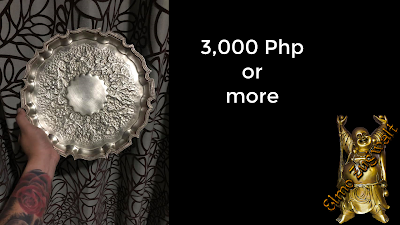
As we can see in the photo below, it is an antique object which is an old silver platter.

He actually wanted to know how much is this antique platter today if he wants to sell it?

Unfortunately, examining a certain antique object such as this one to determine its appropriate price is not easy. It really requires physical examination so relying on this photo alone is not good enough.

2 Ways to Determine the Price of an Antique Plate

There are actually two main bases on how prices are determined for antique plates.

One is by “weight”.

And two is by its “age”.

By Weight

If we are going to price our antique by-weight as its main basis, we are actually basing the price from the weight of the silver material that the object is made of.

So let’s just say for example that we melted our antique silver platter plate then we sold it to the marker for a certain amount of price. This particular price that we got from selling the melted silver is just exactly the same as the price of selling the antique silver platter plate as it is.

If the antique silver platter plate that we have here is made out of pure silver then it is expected that it’s composition is around 92.15 percent silver.

The last time that I checked the price of silver was on January 3, 2022 at a price of 1,178 pesos per ounce.

By Age

If our basis is by the age of the item, then we might be getting more money from it rather than by selling it by its weight. 

When it comes to age, an interested buyer or collector will most likely want to know if the object is a rare kind and it is in good condition. 

If it's rare and still in good condition, we might be getting a much better price offer.

Determining the Actual Value of this Antique Silver Platter Plate

Unfortunately, I cannot determine the appropriate price of this antique silver platter plate because there are many aspects that we need to consider which can only be acquired by examining the object physically. 

Other than examining it physically, it is also very important that we need to know who designed it and when it was made.

We really have to do our research and find out if this antique platter plate is a rare kind and there is a major demand where there are many interested collectors willing to buy it.

The only way that I can give an estimated price for this antique object is to look for other similar objects around. 

Then we can check how much they are worth or how much they were sold. So this is what I did.

As a result, I came across several similar antique platter plates that got sold at a price of around 3,000 pesos and above.

Unprocessed Red Diamond

We have here a very interesting object owned by one of our fellow treasure hunter in this community. This object is a very precious type of stone which can be a diamond, specifically a “red diamond”.

In case you do not know, red diamonds are one of the rarest kinds of diamonds in the world which makes them the most expensive type of precious stone.

So the real question that we are going to answer in this post is, “What is the estimated price value of a red diamond today?”

In this photo, we can clearly see a stone with red color which according to the owner’s findings is a red diamond.

Based on its features, it is obviously an unprocessed type of precious stone. If it is really a red diamond then it is a raw or unprocessed red diamond.

As a treasure hunter, you have to know that the Japanese Imperial Army did not just loot items that were made out of gold. 

They actually confiscated every object that they deemed valuable with their own eyes. Thus, even the unprocessed objects were taken by them.

We can see in this photo a much closer look into the red diamond claimed stone by our fellow treasure hunter in this community. 

Based on my own research, a carat of red diamond reaches an estimated price of about one million dollars. 

It is really too expensive because of its rarity where there are only a few individuals around the world who currently own this kind of diamond. 

This is why we can’t avoid doubting the authenticity of this red diamond claimed by our fellow treasure hunter.

In order to prove that this object is a real red diamond, he performed an actual test using his own “diamond detector”.

We can see in this photo where he used his diamond detector with a positive result confirming the stone as a 100 percent diamond. 

If the LED reaches the 8th bar or over, this means that the object being detected is a real diamond.

Therefore

You have to know that there are treasure deposits that are considered unprocessed or raw. This does not only apply to diamonds but also to gold deposits.

As for this red diamond claimed object, we do not have an idea how our fellow treasure hunter discovered it. 

He probably recovered it as a Yamashita treasure deposit since this is not the only diamond claimed in his possession.

Anyway, aside from the red diamonds, there are also other rare colors of diamonds such as pink and blue. Pink and blue diamonds are also valued at a very high price but the red diamonds remain to have the highest amount of price.

Old Antique Chinese Snuff Jar

One of our fellow treasure hunter in this community has sent us an interesting photo of an “antique Chinese snuff jar”. It has a white color with very beautiful artistic cultural design.

On its front portion, it has a dragon serpent design while at its back is an old Chinese text. So the question asked by our fellow treasure hunter is that he wanted to know my opinion about this antique bottle.

Unfortunately, he did not provide any details about how he acquired this item. So he may either have uncovered it as a treasure hunter or it was passed down to him. 

The only details he gave is that this is a “snuff jar”.

In this photo, we can see the front side of this antique bottle. Based on my analysis, I can say that this is indeed a snuff jar that was originally owned by the Chinese. 

Such bottles often contain traditional medicines.

Snuff jars are intentionally designed to be very artistic. This is the reason why this bottle that we have here has a dragon serpent design. 

In case you do not know, the dragon serpent is the main symbol of China.

In this second photo, this is the opposite side of the bottle where we can see some Chinese writings. These writings have something to do with the original contents of this antique snuff jar. 

Probably, it refers to the type of medicine it originally contained.

Antique snuff jars owned by the Chinese could have a very high amount of price today. But not all antique snuff jars could have such a price because there are several criterias that need to be met.

One of the most important criteria is the age of the item. So the older the snuff jar, the higher the price can be expected.

Two is the original owner of the snuff jar. If the original owner of the bottle was a famous or powerful person in the past then surely, the item is deemed to have a very valuable price.

Currently, the highest snuff jar is valued at a price of 25.3 million Hong Kong dollars. This is equivalent to 1.6 Billion in Philippine Peso. 

And this snuff jar was an “18th-century Imperial Enamel-Painted Bottle” which has been used by the “Qing Imperial Family”.

Therefore

Antique Chinese snuff jars can be very valuable today. However, there are several criterias in order to identify their current value such as the age, the original owner, and etc…

So when it comes to this snuff jar owned by our fellow treasure hunter, if it belonged to the ancient period of China and it was originally owned by a powerful person in the past then surely we can say that this object is very valuable today.

Antique Ring with Diamonds and Old Pendant

We have here two interesting antique objects that we are going to discuss in this post. One is an antique ring with many embedded diamonds. The second object is an old rectangular shape pendant with interesting engraved designs.

Our fellow treasure hunter who sent the photos of these items wanted to know if these objects really have value if he wants to sell them?

In this photo, we can see the antique ring owned by our fellow treasure hunter in this community.

Although, he did not mention any details on how he discovered this item. So it can either be a recovered treasure deposit or as an inheritance.

Anyway, we can notice in this photo one large gemstone or diamond as the main attraction for this antique ring. 

Aside from this, we can also notice other smaller sized precious stones embedded all over the ring.

According to our fellow treasure hunter, the large stone of this old ring is a “pink diamond”. He did some research about it and he came to know that such a kind of diamond is very rare. 

Since it is very rare, it has a very high estimated amount of price that could go over a million worth of dollars.

I did my own research as well about pink diamonds and I confirm that all the details claimed by our fellow treasure hunter are true. 

However, simply using these photos as a basis if the stones embedded on this old ring are really diamonds is not good enough. 

This requires an actual examination from an expert in the field of “gemology”.

There are actually tools that need to be used to fully confirm if a certain stone is an authentic diamond or not.

In this photo, we can see the second antique object owned by our fellow treasure hunter. It is an old pendant which has a very classic and beautiful design. 

Through its design alone, we can say that this item is indeed a legit antique.

This is the opposite side of this antique pendant where you might already be familiar with this kind of design. 

We can see two main characters , the Archangel Gabriel fighting Satan who end up losing the fight. 

Based on this kind of depiction, I can say that this old pendant originated during the Spanish Occupation in the Philippines.

If both the pendant and the ring have always been together then these two items are from the Spanish period.

Therefore

This antique ring with many embedded diamonds on it can reach a value of worth more than a million dollars but when proven that they are legit diamonds and not just ordinary gemstones.

As for the antique pendant, it does look like a lucky charm. If this item has important historical details such as being owned by a famous person in the past, then it may have a high price.

Kanji Symbol on the Old Antique Jar

We have here a photo that was sent to us by one of our fellow treasure hunter which is an old or antique jar that belonged to the Japanese.

According to him, they call this antique jar “tibod” in their own local language. This means that this particular object has a value similar to the jewelries.

So the question here by our fellow treasure hunter is, “Does this antique jar really have a value?”

This antique jar was owned by his father. 

At some period of time in the past, he overheard a conversation between his older brother and a person who was interested in buying the antique jar for a price of ten thousand pesos. 

During this time, this amount of money was already considered a large sum of money. However, their father disagreed with selling his antique jar.

Time had passed and their father died. Suddenly, his older brother asked him about the old jar. This was the only time that he realized that this antique object was left behind by their father in their own house.

So the older brother had asked him to take photos of the item and then look for a person who can read the Kanji symbol on it.

In this photo, we can see a close photo of the Kanji symbol that he wants to be interpreted. According to him, he actually has a Japanese friend who can read Kanji. 

So he showed this symbol and he interpreted the meaning as “power”.

Studying the symbol on my own, I totally agree that this is a Kanji symbol so as with the interpretation of his Japanese friend. 

So aside from “power”, it can also be interpreted with meanings as “strength, strong, bear up, and exert”. 

In my own opinion, this meaning probably has something to do with the original content of this old jar.

Aside from the Kanji symbol, our fellow treasure hunter noticed something about his antique jar. He noticed that there seems to be a mixture of gold on it. 

But when it comes into this matter, this really requires an actual examination of the object to fully confirm.

If it happens that this old jar has a mixture of gold then I can say that this object can be heavy. 

And when it comes to its value, the basis will not only be on the weight of the gold but this includes the antique quality of the jar itself.

Therefore

The engraved Kanji symbol on this antique jar has something to do with “power” or “strength”. Based on my own opinion, this meaning has something to do with the details of the original contents of this old jar.

When it comes to the value, surely, this old object has a high price simply because of being antique. And if it happens that it really has a mixture of gold then its value will further increase several times up.

Raw or Unprocessed Gemstones

We have here some photos sent to us by one of our fellow treasure hunter which are images of raw or unprocessed gemstones.

However, he did not give us any details about where and how he found them. So the question here is, “What exactly are these objects and how much are they worth today?”

In this photo, we can see two stones which seem like ordinary stones only. But their difference will appear when they are exposed to a light source.

As we can see in this photo. He took the smaller stone and exposed it under a light source. And we can see that it emitted a very beautiful yellow color.

This is the second stone in which we can see, it seems to have a red color.

In relation to the Yamashita treasures, you have to know that the Japanese Imperial Army did not just confiscate gold items. 

They actually confiscated all items that they deem valuable into their eyes. Thus, any glittering objects such as gemstones were looted by them.

When it comes to the value of gemstones, their price depends more on their type and rarity. 

So if these two stones found by our fellow treasure hunter are the rare kinds of gemstones then they surely have a very high price.

Aside from the rarity of the gemstones as a basis for pricing, another important criteria are their cuttings and polished form. 

Thus, gemstones that are already processed are valued at a much higher price as compared to those that are not.

If this stone with the yellow color is proven to be a “yellow sapphire” then it surely has a very high amount of value.

As for this stone with red color, if it can be proven to be a “ruby” or “red diamond” then it will surely have an extremely high price.

Therefore

These two strange stones discovered by our fellow treasure hunter are possibly gemstones that possess huge amount of price. 

For those who do not know, analyzing a gemstone to derive its appropriate price does need an actual examination of the object. In short, it can never be done through photos alone.

So the best method to have an estimated price for a certain gemstone is to bring them to the experts in the field of gemology. 

Through them, you will surely gain more details about your gemstones and the amount of expected price when you intend to sell them.

How to Determine the Price of your Antiques

Antiques are valuable assets that have been cherished for generations. However, determining the price of an antique can be a challenging task, especially if you don't know what factors to consider. 

A mispriced antique can lead to a significant loss, either for the buyer or seller. Therefore, it is essential to determine the accurate value of your antique before selling or buying it.

Determining the price of an antique involves various factors, including the condition of the item, its age, rarity, provenance, and the current market demand. 

In this blog, we will discuss the key factors to consider when determining the price of your antiques.

Researching Your Antiques

The first step in determining the price of your antiques is to research them. 

Research helps you identify the type and origin of your antique, determine its age, and research the market value of similar antiques. 

Here are the key steps involved in researching your antiques:

1. Identify the type and origin of your antique 

To determine the price of your antique, you need to identify its type and origin. Knowing the origin and type of the antique can help you research its history and determine its value accurately. 

For example, if you have a piece of furniture, research the style and period in which it was made to help determine its value.

2. Determine the age of your antique

The age of an antique is a crucial factor in determining its value. To determine the age of your antique, you need to consider its design, construction, and materials. 

You can also check for any markings, such as a manufacturer's stamp or a date mark, which can help you determine its age.

3. Research the market value of similar antiques

To determine the market value of your antique, you need to research the prices of similar antiques. 

Check auction house catalogs, antique shops, and online marketplaces to see how much similar items have sold for. This will give you a ballpark figure for the value of your antique.

Assessing the Condition of Your Antiques

The condition of an antique is a significant factor in determining its value. An antique in excellent condition will command a higher price than one in poor condition. 

Here are some key factors to consider when assessing the condition of your antiques:

1. The impact of wear and tear on antique value

Antiques that have been well-maintained and cared for over the years will retain their value better than those that have been heavily used and show signs of wear and tear. 

Factors that can affect the condition of an antique include exposure to sunlight, humidity, and temperature changes.

2. How to identify and document any damage or repairs

When assessing the condition of your antiques, you need to identify any damage or repairs. This includes checking for cracks, chips, missing parts, and signs of restoration. 

It is essential to document any damage or repairs as this can affect the value of your antique.

3. The role of restoration and its effect on value

Restoration can have a significant impact on the value of an antique. A poorly executed restoration can significantly reduce the value of an antique, while a well-executed restoration can enhance its value. 

When considering restoration, it is essential to seek the advice of an expert to ensure that it is done correctly.

Understanding Market Trends and Demand

The market value of antiques can fluctuate based on trends and demand. Understanding market trends and demand is essential in determining the price of your antiques. 

Here are some key factors to consider:

1. The influence of supply and demand on antique prices

The price of antiques is affected by supply and demand. When there is a high demand for a particular type of antique and a limited supply, prices tend to increase. 

Conversely, when there is an oversupply of a particular type of antique, prices tend to decrease.

2. How to stay up-to-date on current trends and market demand

Staying up-to-date on current trends and market demand is essential in determining the value of your antiques. 

You can do this by following online auction sites, attending antique shows and exhibitions, and reading industry publications.

3. Factors that affect market fluctuations

Several factors can affect market fluctuations, including changes in fashion and taste, economic conditions, and political events. 

For example, a rise in interest rates or a recession can cause the demand for antiques to decrease, leading to a drop in prices.

Consultation with Experts

Consulting with experts is essential in determining the value of your antiques. 

Here are some key factors to consider when seeking the advice of an antique expert:

1. The benefits of seeking the advice of an antique expert

Antique experts have the knowledge and experience to accurately determine the value of your antiques. They can help you identify the type and origin of your antique, assess its condition, and determine its market value.

2. How to find a reputable appraiser or antique dealer

When seeking the advice of an antique expert, it is essential to find a reputable appraiser or antique dealer. You can do this by checking their credentials, reputation, and experience.

3. The value of multiple opinions and appraisals

Getting multiple opinions and appraisals from different experts can help you get a more accurate estimate of the value of your antiques. This can help you avoid the risk of getting a mispriced valuation.

Setting a Price for Your Antiques

Once you have done your research, assessed the condition of your antiques, understood market trends and demand, and consulted with experts, you can set a price for your antiques. 

Here are some key factors to consider when setting a price:

1. Combining the factors discussed to determine a fair price

To determine a fair price for your antiques, you need to consider all the factors discussed. 

Combining the research on the type, origin, and age of your antique, assessing its condition, understanding market trends and demand, and consulting with experts can help you determine a fair price.

2. How to negotiate and sell your antiques

When selling your antiques, it is essential to be prepared to negotiate with buyers. It is also important to consider the selling venue, such as online marketplaces, antique shops, or auction houses. 

Each venue has its advantages and disadvantages, and it is essential to choose the one that best suits your needs.

3. Understanding the importance of setting realistic expectations and being flexible

Setting realistic expectations and being flexible is essential in determining the price of your antiques. It is important to remember that the value of antiques can fluctuate, and that it may take time to find the right buyer.

Therefore

Determining the price of your antiques requires careful research, assessment, and consultation with experts. 

By considering the type, origin, and age of your antique, assessing its condition, understanding market trends and demand, and seeking the advice of an antique expert, you can set a fair price for your antiques. 

It is important to remember to be realistic in your expectations and be flexible in your approach to selling your antiques. 

By following these guidelines, you can ensure that you get the best value for your antiques.

Huge Antique Container Pot

Antique objects are windows into our past, providing us with a glimpse of how people lived their lives and what their beliefs, customs, and traditions were. 

As such, antique objects are valued not only for their monetary worth but also for their historical and cultural significance.

One such antique object is the antique Asian monumental spiral design pottery that an avid reader of this blog stumbled upon. 

This object is not only aesthetically pleasing, but it also possesses a wealth of historical and cultural significance.

This blog post aims to explore the physical characteristics of the antique pot, its possible uses, and its value from both an antique collector's and a treasure hunter's perspective. 

Through this exploration, we hope to uncover the mysteries surrounding this antique object and shed light on its place in history.

Physical Characteristics of the Antique Pot

The antique pot in question is around 3 feet high, making it a large object. Its size alone makes it an impressive piece that would have stood out in its original setting. 

However, what truly sets this antique pot apart is its intricate design and craftsmanship.

The pot's spiral design, in particular, is noteworthy. The spirals are uniform and precise, indicating the skill of the artisan who crafted the pot. 

This level of skill would have been honed over years of practice and apprenticeship under a master artisan.

Aside from the spiral design, the pot also has other decorative elements. These include raised bumps and dots that have been carefully placed around the pot's surface. 

It is clear that the artisan who created this pot was dedicated to producing a beautiful object that would be appreciated by its owner and admired by others.

As for the pot's possible uses, the antique collector friends of the blog's author suggest that it was likely used as a container for water or food. 

However, they also mentioned that these kinds of pots were used to store the ashes of cremated individuals. 

This suggests that the pot was likely used in a funerary context and may have held great significance for the people who used it.

The Antique Collector's Perspective

Antique collectors are individuals who have a passion for preserving historical objects. 

They are well-versed in the history and significance of different objects and are often consulted for their expertise in determining an object's value.

When the blog's author asked their antique collector friends about the antique pot, they provided valuable insights into the object's historical and cultural significance.

One of the most important factors in determining the value of an antique object is its condition. 

According to the antique collector friends of the blog's author, the antique pot in question has been preserved nicely, which is a positive factor in its valuation.

Based on the pot's condition and the current market for antique objects, the antique collector friends estimated the pot's value to be around 2000 pesos. 

This price is subject to change depending on various factors such as the object's rarity, age, and historical significance.

Therefore

The antique Asian monumental spiral design pottery that the avid reader of this blog stumbled upon is an object that possesses both aesthetic and historical value. 


Its size and intricate design speak to the skill of the artisan who crafted it, while its possible uses provide insight into the culture and traditions of the people who used it.

From an antique collector's perspective, the pot's condition and rarity are important factors in determining its value. 

Meanwhile, the treasure hunter's perspective provides a different lens through which to view the pot's history and possible uses.

Regardless of whether one is an antique collector or a treasure hunter, both share a passion for preserving historical objects and uncovering their stories. 

By valuing and studying antique objects such as this antique pot, we can gain a better understanding of our past and the people who came before us.

Old Spanish Coins

Coins have been used as a form of currency for centuries, and the older they are, the more valuable they become. 

An avid reader of this blog has sent us an image of old Spanish coins that are rusty and in poor condition. 

While these coins may have historical significance, their value may be diminished due to their lack of preservation. 

In this blog post, we will discuss the historical significance of old Spanish coins in the Philippines, the factors that affect the value of old coins, and the role of treasure hunting in discovering old coins.

The Historical Significance of Old Spanish Coins in the Philippines

The Philippines was a Spanish colony for over 300 years, from 1565 to 1898. During this period, Spanish coins were the primary form of currency used in the Philippines. 

Spanish coins were minted in various denominations, including gold, silver, and copper. Copper coins were the most commonly used, as they were more affordable for everyday transactions.

Spanish coins were introduced to the Philippines as part of the Galleon Trade, which was a maritime trade route between Manila and Acapulco. 

The trade route was established in 1565 and lasted for over 200 years. The Spanish galleons brought various goods from Mexico to the Philippines, including silver and gold coins. 

The silver coins were used to purchase goods in the Philippines, while the gold coins were sent back to Mexico to pay for the goods purchased.

One of the most famous Spanish coins used in the Philippines was the Real de a Ocho, also known as the Spanish dollar. 

The Real de a Ocho was a silver coin that was widely used in Spain and its colonies, including the Philippines. The coin was worth eight reales, hence its name. 

The Real de a Ocho was also used as a trade coin in China, Japan, and other parts of Asia.

Factors Affecting the Value of Old Coins

The value of an old coin is determined by various factors, including its age, rarity, condition, and historical significance. 

In the case of the old Spanish coins sent by the reader, their value may be affected by their condition, as they are rusty and the details on their surfaces are not clearly visible.

The material used in an old coin can also affect its value. For example, gold and silver coins are generally more valuable than copper coins. 

However, rarity can also affect the value of an old coin. If there are only a few coins of a particular type that exist today, their value can be significantly higher.

Another factor that can affect the value of an old coin is its historical significance. Coins that were used during important historical events or by famous historical figures can be highly valuable. 

For example, a coin that was used by George Washington during the American Revolution would be worth significantly more than a regular coin from that time period.

The Role of Treasure Hunting in Discovering Old Coins

Treasure hunting has been a popular activity for centuries, and it involves searching for hidden treasures that have been buried or lost over time. 

One of the most famous treasures that have been discovered in the Philippines is the Yamashita treasure. 

The Yamashita treasure was a collection of valuable items that were stolen by the Japanese during World War II and hidden in various parts of the Philippines.

Old coins are often part of buried treasures, and treasure hunters use various methods to find them. One method involves using metal detectors to search for buried objects that contain metal. 

Another method involves using historical documents or maps to locate buried treasures.

The Japanese Imperial Army also confiscated a lot of coins from different parts of the world during World War II, including old coins owned by Spain. 

The Japanese buried these treasures to prevent them from falling into the hands of the Allied Forces. 

As a result, treasure hunters have been searching for these treasures for decades, and some have been successful in discovering them.

However, treasure hunting can be a dangerous and illegal activity. 

Many treasure hunters have been arrested or killed while searching for treasures, and the government has enacted laws to regulate treasure hunting activities. 

In the Philippines, the National Museum regulates the excavation and recovery of cultural treasures and artifacts. 

Anyone who wishes to conduct a treasure hunting activity must secure a permit from the National Museum.

In conclusion, old Spanish coins have a significant historical significance in the Philippines as they were used as currency during the Spanish colonial period. 

However, the value of these coins can be affected by various factors, such as their condition, rarity, and historical significance. 

Old coins are often part of buried treasures, and treasure hunting has been a popular activity for decades. 

While treasure hunting can lead to the discovery of valuable artifacts, it can also be a dangerous and illegal activity. 

It is important to follow the regulations set by the government to protect cultural treasures and artifacts.

Antique Silver Sterling Bar

The world of antique collecting can be a fascinating and rewarding pursuit for those with a passion for history and a love of material culture. 

One such example of an intriguing and mysterious antique is the silver bar in question. 

This small rectangular piece of metal has captured the attention of one avid reader and follower of this blog, who discovered it in a shop and was intrigued by its history and value. 


In this blog post, we will delve into the features of the silver bar, examine the debate over its authenticity, and explore its potential historical value.

The Silver Bar's Features

The silver bar is a small rectangular piece of metal, with markings and designs on both sides. 

On one side, there are inscribed characters that appear to be ancient, though their meaning is currently unknown. 

On the other side, there is a large cobra design that is both intricate and imposing. The cobra seems to be the centerpiece of the design, with other smaller markings and designs surrounding it.

The silver bar has a worn and aged appearance, suggesting that it has been around for many years. 

The metal itself appears to be tarnished and has a grayish hue, rather than the bright silver color that one might expect from a new piece of silver.

The markings on the silver bar are a mystery, and their significance is unknown. It is possible that they were intended to convey a message or provide information about the origin of the silver bar.

 Alternatively, they may have had a more symbolic or decorative purpose, serving to enhance the aesthetic appeal of the bar.

The Debate over Authenticity

The debate over the authenticity of the silver bar is a contentious issue. The current owner of the bar claims that it is made of pure sterling silver, which would make it quite valuable. 

However, upon closer examination, the avid reader who discovered the bar noticed that it contained mixtures of lead, which would significantly lower its value. 

This observation has led to doubts about the authenticity of the bar and its value as an antique.

There is also the possibility that the silver bar is a scam. 

Some individuals in the antique collecting world will create counterfeit pieces that are designed to look like genuine antiques, in order to sell them for a higher price. 

This is a deceptive practice that can be difficult to detect, especially for those who are not experts in the field.

The Historical Value of the Silver Bar

Despite the debate over its authenticity, the silver bar may still hold historical value. It is possible that the bar was passed down from one powerful individual to another, as a symbol of status or wealth. 

The cobra design on one side of the bar may have had a specific meaning or significance in the culture or society in which it was created.

Decoding the inscribed characters on the silver bar could provide valuable insights into its history and origins. 

However, this is a complex and time-consuming process, requiring expertise in ancient languages and writing systems. 

It is possible that the inscriptions may be in a language or script that is no longer in use, adding another layer of difficulty to the decoding process.

Despite the challenges involved in uncovering the historical value of the silver bar, there is still much to be gained from studying and preserving it. 

Historical artifacts like the silver bar offer a unique glimpse into the past, providing valuable information about the cultures and societies that created them. 

They also serve as tangible reminders of our shared history, connecting us to the past in a meaningful way.

In conclusion, the silver bar in question is a fascinating and mysterious artifact that offers much to be explored and studied. 

While there is debate over its authenticity and value, there is still much to be gained from examining its features and history. 

The inscribed characters and cobra design provide tantalizing clues to its past, and the possibility that it was passed down as a symbol of status or wealth adds to its intrigue.

Ultimately, the value of the silver bar lies not just in its material worth, but in its historical significance. It is a tangible link to the past, offering insights into the cultures and societies that came before us. 

The challenge of decoding its inscriptions only adds to its appeal, making it a worthy subject of study for those interested in history, archaeology, and linguistics.

As the world of antique collecting continues to evolve, it is important to preserve and study these artifacts for future generations. 

The silver bar may be just one small piece of metal, but it has the potential to offer valuable insights into the past and connect us to our shared history in a meaningful way.

The silver bar is an intriguing and mysterious object that offers much to be studied and explored. 

Its features, markings, and potential historical value make it a worthy subject of inquiry for anyone interested in history, archaeology, or material culture. 

While its authenticity may be a matter of debate, its significance as a tangible link to the past is unquestionable. 

As we continue to explore the world of antiques and material culture, the preservation and study of artifacts like the silver bar will remain an important task for future generations.

AYALA INCORPORADA DESTILERIAS Old Green Bottle

The Philippines is known for its rich history and diverse culture. As a former colony of Spain and the United States, the country has been shaped by various influences over the centuries. 

One of the notable relics of the past is the Old Manila Gin Bottle, also known as "Cuatro Cantos."


This vintage bottle from the early 1900s has become a popular item among collectors and treasure hunters alike, as it represents a bygone era in the Philippines.

The Old Manila Gin Bottle is distinguished by its green color and the marking "AYALA INCORPORADA DESTILERIAS" on its upper portion. 

This bottle was produced during the early days of Manila or what is commonly known as the "Old Manila." 

The city was the center of commerce and trade in the Philippines during the Spanish colonial period, which lasted for over three centuries. 

The bottle's unique design and historical significance have made it a highly sought-after item among collectors and history enthusiasts.

In this blog post, we will explore the history and value of the Old Manila Gin Bottle. We will also discuss its potential use as a marker for hidden treasures during World War II.

Historical Context of the Old Manila Gin Bottles

The Old Manila Gin Bottles, or "Cuatro Cantos," were produced in the early 1900s by the Ayala Corporation's Destilerias y Licorerias de Filipinas. 

The company was one of the largest distilleries in the Philippines and produced various alcoholic beverages such as gin, rum, and brandy. 

The Cuatro Cantos bottle was a popular design during that time, known for its four-sided shape and embossed markings.

The bottle's green color was achieved through the use of manganese dioxide, a substance commonly used in glassmaking during the 19th century. 

The green glass was popular among bottle manufacturers because it hid impurities in the glass and made the product appear more attractive to buyers. 

The green color also helped to protect the contents of the bottle from sunlight, which could affect the quality of the alcohol.

The Old Manila Gin Bottle's historical significance stems from its production during the early days of Manila. The city was founded in 1571 by the Spanish conquistador, Miguel Lopez de Legazpi. 

It was named after the Spanish city of Manila and became the capital of the Philippines during the Spanish colonial period. 

Manila served as the center of trade and commerce in the country, with many foreign merchants and traders visiting the city to conduct business.

During the American occupation of the Philippines, which began in 1898, Manila underwent significant changes. 

The city was modernized with the construction of new buildings and infrastructure such as roads, bridges, and railways. 

The American influence also introduced new products and technologies to the country, including glass manufacturing. 

The Old Manila Gin Bottle was produced during this period of transition, and its design reflects the influences of both Spanish and American cultures.

Valuation of the Old Manila Gin Bottle

The value of antique bottles such as the Old Manila Gin Bottle is determined by several factors, including rarity, condition, age, and historical significance. 

Rarity is a crucial factor in determining the value of an antique bottle. The Old Manila Gin Bottle is considered rare because it was produced in limited quantities during a specific period. 

The bottle's design and unique marking make it highly sought after among collectors.

Condition is another important factor in determining the value of an antique bottle. The Old Manila Gin Bottle is often found in various conditions, from excellent to poor. 

Bottles that are in excellent condition, with no chips or cracks, and with their original labels intact, command the highest prices. Bottles that have been damaged or have missing labels are worth less.

Age is also a significant factor in determining the value of an antique bottle. 

The Old Manila Gin Bottle, which was produced around the 1900s, is over a century old and is considered a valuable antique. Its age adds to its historical significance and makes it a desirable item for collectors.

The Old Manila Gin Bottle's historical significance also contributes to its value. The bottle represents a bygone era in the Philippines and serves as a reminder of the country's colonial past. 

Its unique marking, "AYALA INCORPORADA DESTILERIAS," reflects the influence of Spanish and American cultures in the Philippines. 

As such, the bottle has become a popular item among history enthusiasts and collectors.

According to a collector interviewed for this blog post, the current value of the Old Manila Gin Bottle is around 2000 pesos (approximately 40 USD) per bottle. 

However, the value of antique bottles can fluctuate depending on various factors such as supply and demand, economic conditions, and the preferences of collectors.

The Old Manila Gin Bottle as a Marker for Hidden Treasures

During World War II, the Japanese Imperial Army (JIA) invaded the Philippines, and the country became a battlefield for the Allied and Axis powers. 

The JIA looted various treasures, including gold, silver, and other valuable items, and hid them in various locations throughout the country. 

These treasures are collectively known as the "Yamashita treasures," named after General Tomoyuki Yamashita, who was in charge of the JIA's operations in the Philippines.

There have been many stories and rumors about the whereabouts of the Yamashita treasures, and treasure hunters have been searching for them for decades. 

One theory is that the JIA used the Old Manila Gin Bottle as a marker for their hidden treasures.

The theory is based on the fact that the JIA enjoyed drinking Old Manila Gin during their occupation of the Philippines. 

The bottles were readily available in the country, and the JIA may have used them to mark the locations of their hidden treasures. 

According to some treasure hunters, they have found Old Manila Gin Bottles near suspected Yamashita treasure sites, suggesting that the theory may have some merit.

However, it is important to note that there is no concrete evidence to support the theory. 

It is possible that the Old Manila Gin Bottles found near suspected treasure sites are simply coincidental, and the JIA did not use them as markers for their hidden treasures. 

The theory remains a subject of speculation and debate among treasure hunters and historians.

The Old Manila Gin Bottle, also known as "Cuatro Cantos," is a valuable antique that represents a bygone era in the Philippines. 

Its unique design and historical significance make it a highly sought-after item among collectors and history enthusiasts. 

The bottle's value is determined by several factors, including rarity, condition, age, and historical significance. 

Its current value is around 2000 pesos per bottle, although this can fluctuate depending on various factors.

The Old Manila Gin Bottle's association with the JIA and the Yamashita treasures adds to its intrigue and mystique. 

While there is no concrete evidence to support the theory that the JIA used the bottle as a marker for their hidden treasures, the theory remains a subject of speculation and debate among treasure hunters and historians. 

The bottle serves as a reminder of the Philippines' colonial past and the country's resilience in the face of adversity. Its value and significance will continue to endure for generations to come.